
Bryant Park NYC: History, Attractions & What to Expect on a Free Walking Tour
Bryant Park NYC sits in the cultural heart of Midtown Manhattan directly behind the New York Public Library and has evolved into one of the city’s most beloved urban parks. This article explains Bryant Park’s historical significance, highlights the attractions and seasonal programming that draw locals and visitors, and outlines what to expect on a free walking tour starting at the park. Many readers want a concise timeline, a practical list of must-see features like the Winter Village and Le Carrousel, and clear logistics for planning a visit; this guide delivers that information with actionable tips. You will learn the park’s transformation from early municipal uses to a model public space, the seasonal calendar and year-round amenities, how a Midtown Manhattan walking tour typically flows, and practical transport and accessibility details. The following sections use targeted lists and tables to surface quick comparisons and planning checklists, and they include a brief example of a tips-based free walking tour that begins at Bryant Park to help you decide whether to join one.
Bryant Park rewards both quick stops and extended visits with layered programming that changes by season and time of day, so this article balances history and present-day visitor needs. Expect clear featured-snippet style answers for common questions such as “Why is Bryant Park significant?” and “What can I expect on a walking tour?” Each H2 section includes short semantic summaries, structured lists, and EAV-style tables to help you scan and plan efficiently. Read on for a practical timeline, a ranked attractions list, an itinerary snapshot for free walking tours in Midtown Manhattan, planning checklists including accessibility notes, and concise FAQ-style responses to typical visitor questions.
What is the historical significance of Bryant Park in NYC?
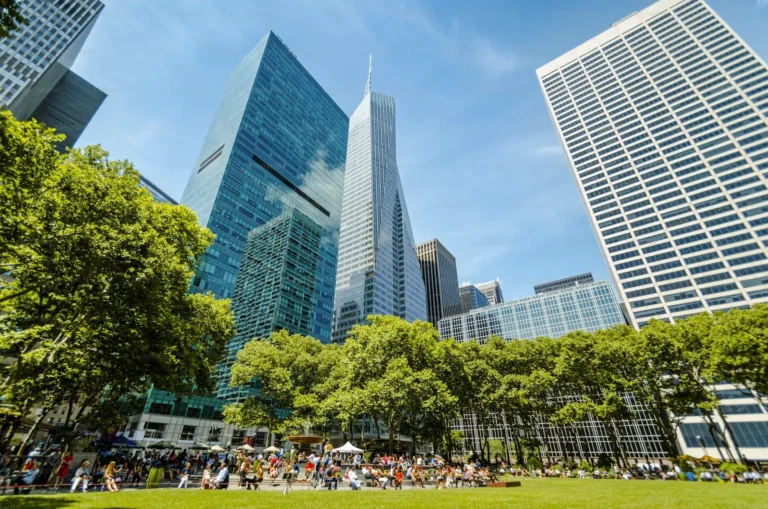
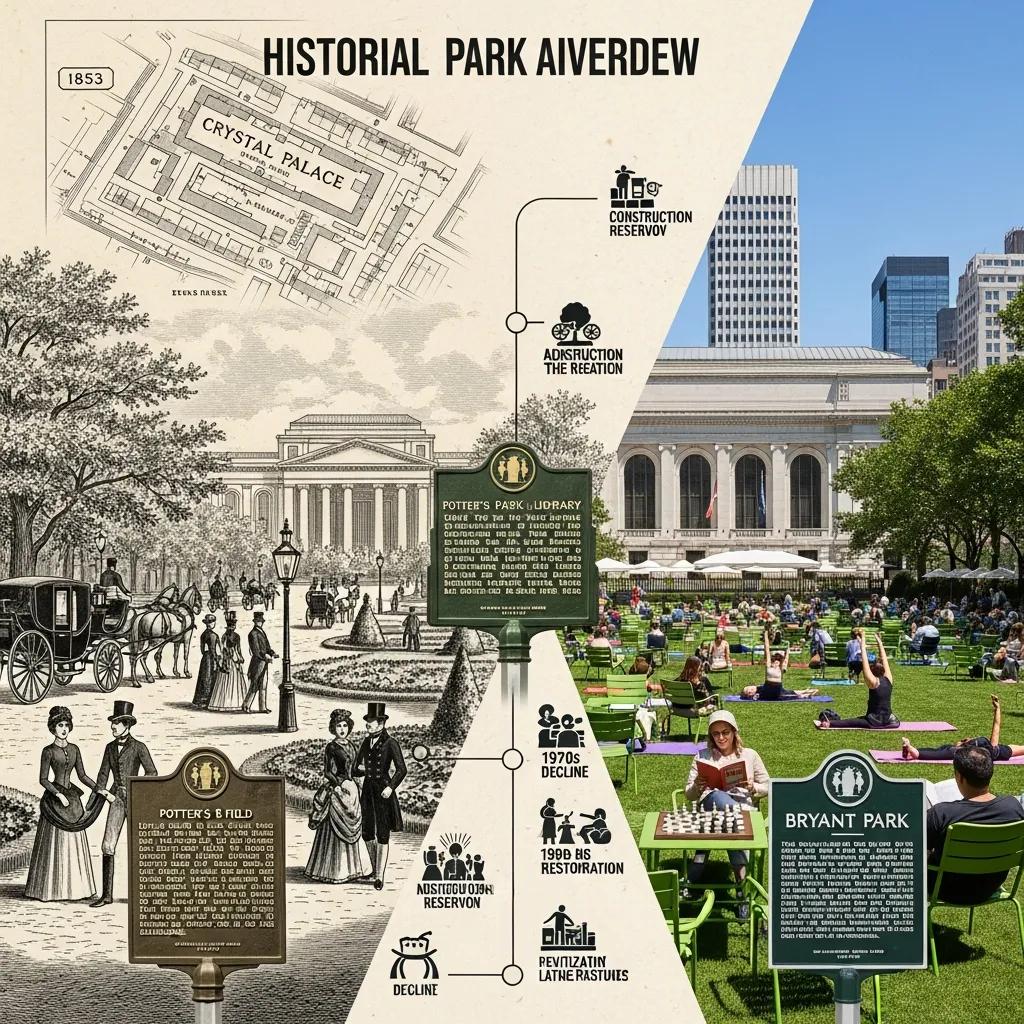
Bryant Park is historically significant because it encapsulates New York City’s changing public priorities: burial ground, water supply infrastructure, exhibition site, and finally a civic green space that reflects modern urban planning principles. The park’s layered past explains why it sits adjacent to major civic institutions and why its design and programming have mattered for city life. Understanding these transitions clarifies how public space management, landscape architecture, and private-public partnerships combined to create a vibrant urban park that supports cultural programming and everyday leisure. This historical arc leads naturally into a focused timeline of major transformations that shaped the park into what visitors experience today.
The timeline below summarizes the key milestones in Bryant Park’s evolution and highlights turning points that explain its present character.
- Potter’s Field and Croton Reservoir: The site served municipal functions including burial and as part of early water infrastructure.
- Mid-19th-century exhibition uses: Temporary structures and exhibitions briefly reshaped public access and use.
- Renaming and commemoration: The park was named for William Cullen Bryant, reflecting civic commemoration practices.
- 20th-century decline and late-20th-century revitalization: Management and design reforms transformed the park into a model urban space.
How did Bryant Park transform from Potter’s Field to a vibrant urban space?
Bryant Park’s transformation was driven by changing civic needs and deliberate restoration efforts that prioritized safety, programming, and design. Early municipal uses gave way to periods of neglect in the 20th century when the park suffered from underuse and safety concerns, prompting a concerted revitalization that included redesign of circulation, activation through events, and improved maintenance regimes. These efforts relied on public-private collaboration to fund programming and day-to-day operations, which in turn increased legitimate activity and discouraged crime. The revitalization demonstrates how targeted design changes—like clearer sightlines, programmable lawns, and permanent amenities—pair with consistent management to convert neglected spaces into lively public squares.
Urban Regeneration Through Public-Private Partnerships
private sector participation in urban planning, public–private partnership (PPP) arrangements. Urban regeneration practices constitute an important response in the face of urban challenges.
Public–private partnerships in urban regeneration projects: a review, PV De Paula, 2023
The success of this restoration sets up understanding why Bryant Park is often cited as a model park, which leads into the park’s association with William Cullen Bryant and the naming significance explored next.
Who was William Cullen Bryant and why is the park named after him?
William Cullen Bryant was a prominent 19th-century poet, journalist, and civic figure whose work and public stature made him a symbol of cultural life in New York City, and the park bears his name as a civic honor. Bryant’s influence extended beyond literature; he was associated with civic causes and the early cultural institutions that shaped the city’s public identity, making the park’s renaming part of a broader practice of commemorating civic leaders in public space. Naming the park after Bryant linked the site to the adjacent library and to New York’s intellectual and cultural landscape, reinforcing the park’s role as a place for reading, performance, and public life. Recognizing this connection helps visitors appreciate the park’s programmatic emphasis on literary and cultural activities that persist today.
This naming history helps frame the park’s cultural programming, which in turn ties directly to the attractions and seasonal events visitors can expect to find on-site.
What are the must-see attractions and activities at Bryant Park?
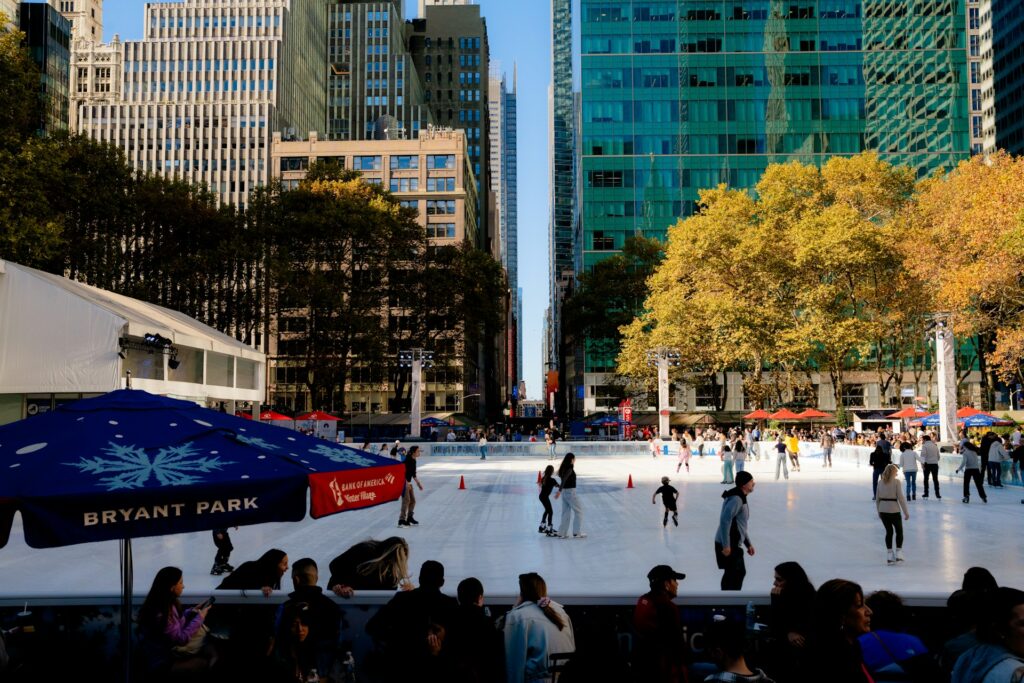
Bryant Park attractions blend seasonal markets and ice skating with year-round amenities that encourage lingering, recreation, and cultural participation. Visitors encounter a compact mix of programmed features—seasonal Winter Village festivities, a free reading room, family-friendly Le Carrousel, open green lawn with tables and chess, and sculptural elements and fountains—that together create varied reasons to visit. The park’s offerings suit both short stops and longer visits, and the combination of free activities and special events ensures visitors of different interests find something appealing. Below is a ranked list of the top features to prioritize on a first visit.
- Winter Village (seasonal market and ice rink): A festive market and free-entry ice skating area with vendor stalls during the winter season.
- Le Carrousel: A family-friendly carousel offering ticketed rides and a charming visual centerpiece for children.
- Bryant Park Reading Room: Free, year-round seating and programming that encourages reading, quiet work, and occasional author events.
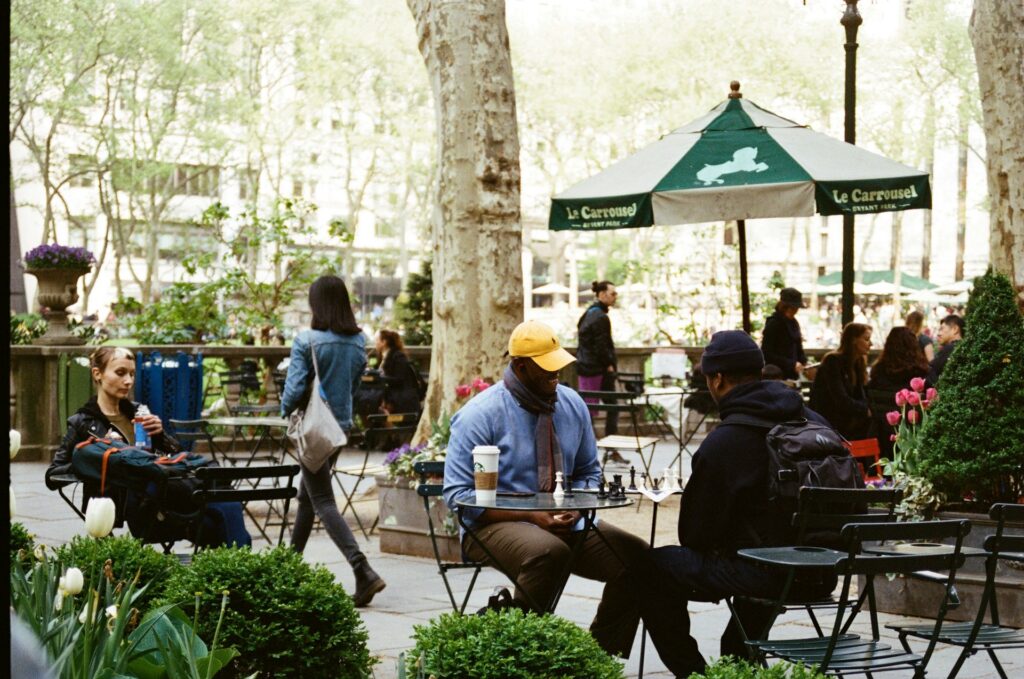
- Lawn and Tables with Chess: Open green space with movable chairs and public chess tables ideal for lounging or people-watching.
- Monuments and Fountains: Sculptural elements and memorials that punctuate walkways and link to the park’s history.
These attractions reflect the park’s design priorities—accessibility, programming, and day-to-day activation—and lead into more detailed seasonal and year-round descriptions below.
Intro to attractions comparison table: the table below provides a quick comparison of notable attractions to help you choose activities based on season and interest.
| Attraction | Characteristic | Best Time to Visit |
|---|---|---|
| Winter Village | Seasonal market + ice rink; festive vendors | November–January (holiday season) |
| Le Carrousel | Family-friendly ride; ticketed per ride | Year-round; mornings for fewer lines |
| Reading Room | Free seating and programming; quiet space | Year-round; weekdays are quieter |
| Lawn & Chess | Open green with movable seating | Spring–Fall; evenings for events |
| Monuments & Fountains | Sculptural landmarks and water features | Year-round; daytime for photos |
This comparison underscores how seasonal and year-round attractions overlap and suggests when to time your visit for specific experiences.
Which seasonal events make Bryant Park unique, including the Winter Village?
Seasonal events are a major draw at Bryant Park and create recurring reasons to return: a winter market and ice rink, summer outdoor movies and concerts, and periodic pop-ups throughout the year. The Winter Village is the most prominent seasonal program, transforming the plaza with vendor stalls and an ice rink that invites visitors to skate or browse artisan goods; it typically draws large crowds during the holiday season. In warm months, the park schedules free film screenings, small concerts, and occasional Broadway previews that animate evenings and bring diverse audiences together. For each seasonal highlight, arriving earlier in the day or on weekday evenings often reduces crowding and enhances the visitor experience.
Seasonal programming demonstrates how Bryant Park uses calendar-based events to maintain a steady flow of visitors and varied activities across the year, which ties into the park’s year-round amenities described next.
What year-round attractions can visitors enjoy, such as Le Carrousel and the Reading Room?
Year-round attractions provide consistent reasons to visit Bryant Park independent of seasonal programming, from the family-friendly Le Carrousel to the open Reading Room and the lawns with movable seating. Le Carrousel offers ticketed rides and is especially appealing to families with young children, while the Reading Room provides free seating, occasional author events, and a calm alternative to Midtown bustle. The lawn and tables invite spontaneous picnics, remote work sessions, or casual chess matches, and the park’s fountains and monuments add visual interest and photographic opportunities. These permanent features make Bryant Park a reliable destination for everyday leisure as well as special occasions.
Understanding these year-round elements helps plan both brief and extended visits and sets up practical expectations for a walking tour that starts at the park, which is the next focus.
What can visitors expect on a free walking tour of Bryant Park and Midtown Manhattan?
A free walking tour of Bryant Park and Midtown Manhattan typically begins at a clearly identified corner of the park, runs for approximately two hours, and operates on a tips-based pricing model led by local guides who share historical insight and neighborhood stories. These tours are designed to balance close-up exploration of Bryant Park’s features with walking routes that visit nearby Midtown landmarks, giving participants both context and practical orientation. The value proposition of such tours lies in local expertise, flexible payment through tips, and often bilingual options that make tours accessible to a broader audience. Below is a concise itinerary snapshot that outlines a common meeting point, duration, and price model for a typical Midtown walking tour.
Intro to itinerary snapshot table: this table offers a quick view of the standard components of a tips-based Bryant Park walking tour to help you decide whether to join.
| Meeting Detail | Attribute | Typical Value |
|---|---|---|
| Meeting Point | Location | Southwest corner of Bryant Park near the library steps |
| Duration | Time | ~2 hours |
| Price Model | Cost | Tips-based (pay what you wish) |
| Language Options | Availability | English and Spanish commonly offered |
| Route Highlights | Stops | New York Public Library, lawn, Times Square, Grand Central variations |
This itinerary snapshot helps set expectations: tours are paced for walking and storytelling, and guides emphasize local narratives and practical tips that enhance independent exploration.
Research into free walking tours further emphasizes the significant role guides play in mediating heritage and shaping the tourist experience.
Free Walking Tours: Guides, Heritage, and Tourist Identity
This research focuses on the Cape Town Free Walking Tours and investigates the importance of the role that tour guides play in mediating space and heritage. Drawing upon literature surrounding tourism, the tourist city, as well as memory and heritage, this study uses a mixed methods approach, both surveying tour participants as well as interviewing tour guides and managers of the Cape Town Free Walking Tours. In addition, this research also draws from my own experience participating in walking tours and making notes through participant observation. This research shows that tourism spaces are created, curated and maintained through a performance of identities that serves to validate the tourist identity. It shows that it is a complex process of identity creation in relation to the search for authenticity. It also details the important role of the tour guide in mediating heritage and space as well as serving as an ambassador for their host society.
The Cape Town Free Walking Tours: Whose History Is It Anyway? The shaping of place and space in a tourist city, 2018
- Local Expertise: Guides provide historical context, neighborhood anecdotes, and connections to nearby institutions.
- Cost Flexibility: Tips-based pricing lets visitors decide value based on experience and budget.
- Bilingual Options: English and Spanish tours increase accessibility for diverse visitors.
- Small-Group Feel: Tours often keep groups manageable for better interaction and questions.
These benefits highlight why many visitors start with a guided walking tour and then return for self-guided exploration, which leads into an example of a local operator that runs such tours.
NYC Free Tour operates tips-based walking tours in Midtown Manhattan and often uses Bryant Park as a meeting point for its Midtown Manhattan Walking Tour; the company emphasizes local guides, a flexible tipping model, and bilingual offerings in English and Spanish. The Midtown Manhattan Walking Tour typically lasts about two hours, begins at the park, and highlights many of the attractions described here while giving practical orientation to nearby transit and landmarks. Joining a tips-based local tour like this can streamline planning, provide local context that enriches attractions like the Reading Room and Winter Village, and help visitors identify the best times and routes for follow-up independent visits. This practical example demonstrates how guided experiences complement independent exploration without replacing the park’s broad public offerings.
How can visitors plan their visit to Bryant Park for the best experience?
Planning a visit to Bryant Park involves timing your trip to match seasonal programming, choosing convenient transportation routes, and accounting for accessibility needs to ensure a comfortable experience. Best timing depends on priorities: winter for the Winter Village and skating, spring and fall for mild weather and smaller crowds, and summer evenings for outdoor movies and events. Knowing nearest transit options and accessible entrances reduces time spent navigating, and bringing essentials—water, layers, and a charged phone—makes visits smoother. The table below summarizes transport and accessibility options to help you map your journey from common Midtown hubs.
Logistics table intro: use this quick reference to choose transit routes and understand accessibility features before you go.
| Transport Option | Nearest Subway Stops | Typical Travel Time from Midtown Hubs |
|---|---|---|
| Subway | 42nd Street lines (multiple lines) | 5–15 minutes walk from nearby stations |
| Bus | Midtown routes stop along 42nd Street | Variable, often 10–20 minutes |
| Taxi/Rideshare | Drop-off along 42nd Street | Immediate curb access |
| Walking | From nearby landmarks | 5–15 minutes from Times Square/Grand Central |
This table provides practical routing guidance so visitors can pair park time with other Midtown destinations or guided tours and supports accessibility planning described next.
- Time visits for off-peak hours: Weekday mornings or early afternoons typically have fewer crowds than weekend evenings.
- Pack for comfort: Wear comfortable shoes, bring a light jacket in cooler months, and carry a small umbrella for spring showers.
- Combine nearby attractions: Pair a short park visit with the adjacent library or a nearby landmark to create an efficient Midtown itinerary.
- Plan for accessibility: Identify ramps and accessible entrances in advance if mobility accommodations are needed.
These tips simplify decision-making and encourage combining the park with a guided Midtown walking tour or self-directed exploration, which helps visitors adapt plans to seasonal programming and personal pace.
For visitors who prefer an organized experience, joining a guided Midtown walking tour provides timing guidance, accessibility awareness, and a coherent route that connects Bryant Park to other key sites in the neighborhood without needing to research each stop independently. This brief reminder ties planning considerations to the practical benefits of guided tours and supports choosing the right visit style.
When is the best time to visit Bryant Park considering seasonal events and weather?
The best time to visit depends on the experience you want: winter for the Winter Village and skating, spring and fall for pleasant weather and smaller crowds, and summer evenings for events like movies and concerts. Weekday mornings are usually calmest across seasons, offering quieter access to the Reading Room and lawns, while holiday weekends are busiest during the Winter Village. If your priority is avoiding lines at Le Carrousel or crowded vendor stalls, aim for weekday visits or early afternoons on event days. Considering weather forecasts and event schedules before you go reduces surprises and improves enjoyment of park amenities.
These seasonal recommendations inform when to join a tour versus exploring independently, and they naturally lead into specific accessibility and transit details that follow.
What accessibility features and nearby transportation options are available?
Bryant Park provides wheelchair-friendly routes, ramps at major entrances, and accessible pathways that connect to nearby subway stations and bus routes, making the park navigable for most visitors. Nearby transit lines on 42nd Street and bus routes offer direct access to the park; elevators and station accessibility vary by stop, so planning your station choice ahead of arrival is helpful. The park also offers public restrooms and Wi-Fi in many areas, which supports longer stays and on-the-go planning. Knowing these features helps visitors with mobility considerations and those combining park time with adjacent Midtown destinations.
Enhancing Urban Park Visitor Experience & Accessibility
We provide strategies for urban park planners, governmental agencies, and groups to continue enhancing urban park experiences and accessibility for diverse visitors.
Visitor access, use, and desired improvements in urban parks, ML Talal, 2021
What are common questions about Bryant Park answered?
This FAQ-style section provides concise answers to frequent visitor queries about Bryant Park, optimized for quick reference and featured-snippet style responses. Short, direct answers address worthiness of a visit, free things to do, and realistic timeframes for exploring the park and its surroundings. These quick responses help visitors decide how much time to allocate and whether to join a guided walking tour for added context.
Why is Bryant Park considered a model urban park and popular tourist destination?
Bryant Park is considered a model urban park because its design and management create a safe, flexible public space that supports diverse programming and sustained daily activity. Key features include clear sightlines and circulation that promote safety, movable seating and lawns that encourage user choice, and a programming calendar that ensures regular events and steady foot traffic. A public-private management approach funds maintenance and activation while preserving free public access, producing both social and economic benefits for the neighborhood. These combined elements illustrate why urban designers often point to Bryant Park as a replicable case study in park revitalization.
This explanation clarifies the park’s role as both a community resource and a tourist destination and leads into a practical time estimate for visits.
How long does it take to explore Bryant Park and its surroundings on foot?
Visit duration depends on your goals: a quick highlights stop can take 15–30 minutes, a standard visit to enjoy the lawn, Reading Room, and a carousel ride is about 1–2 hours, and an extended exploration that includes a walking tour and nearby landmarks (such as the New York Public Library and Midtown sites) can take 3+ hours. Quick visits let you photograph monuments and stroll the main paths, while standard visits allow for a relaxed break and attendance at a short program or market browsing. Extended visits are ideal for combining a guided Midtown walking tour with time to linger at seasonal events and adjacent cultural sites.
These time estimates help visitors plan whether to squeeze Bryant Park into a Midtown afternoon or dedicate a longer portion of a day to explore both the park and nearby attractions.
This article ends after the last provided heading and supplies history, attractions, tour expectations, planning tools, and concise answers to common visitor questions to help you make the most of Bryant Park and any guided Midtown walking tour you choose to join.
Leave a Reply