
Midtown Manhattan Walking Tour: Explore Top Attractions, Hidden Gems & Local Insights
Midtown Manhattan walking tours condense the borough’s dense history, architecture, and street life into a compact, walkable experience that suits first-time visitors and repeat explorers alike. This guide explains what to expect on a Midtown Manhattan walking tour, highlights the iconic stops and hidden gems you’ll encounter, and outlines practical planning advice so you arrive prepared and curious. Readers will learn how guides frame landmarks like Bryant Park and Rockefeller Center, where to spot lesser-known architectural treasures, and which local stories turn buildings into living narratives. Many travelers want both efficient sightseeing and authentic context; a well-run walking tour delivers both through focused routes and local commentary. Below we map out must-see attractions, tips for uncovering offbeat spots, the role of bilingual local guides and the Free Tour Community, logistics for a typical 2-hour Midtown route, and what recent guests tend to praise. This article uses targeted guidance for a Midtown Manhattan walking tour, semantic context for each stop, and practical checklists so you can plan and enjoy the route with confidence.
What Are the Must-See Iconic Landmarks on the Midtown Manhattan Walking Tour?
A Midtown Manhattan walking tour centers on a short sequence of high-value cultural and architectural sites that illustrate New York’s commercial, civic, and entertainment history. These landmarks function as narrative anchors: parks and libraries show civic life, Art Deco complexes reveal 20th-century ambitions, and transit hubs demonstrate the city’s infrastructural scale. The tour route typically weaves these stops into a coherent story so each location builds on the previous one, connecting public space, architecture, and urban lore. Below is a concise list of the primary attractions featured on many Midtown walking routes, each with a one-sentence description for quick scanning and featured-snippet potential.
- Bryant Park — A revitalized urban lawn and cultural hub adjacent to the New York Public Library, known for seasonal markets and public programming.
- New York Public Library — A Beaux-Arts landmark with iconic lion statues and a reading room that symbolizes civic learning and architectural grandeur.
- Fifth Avenue — A ceremonial boulevard lined with flagship stores and notable façades that exemplify Midtown’s commercial density.
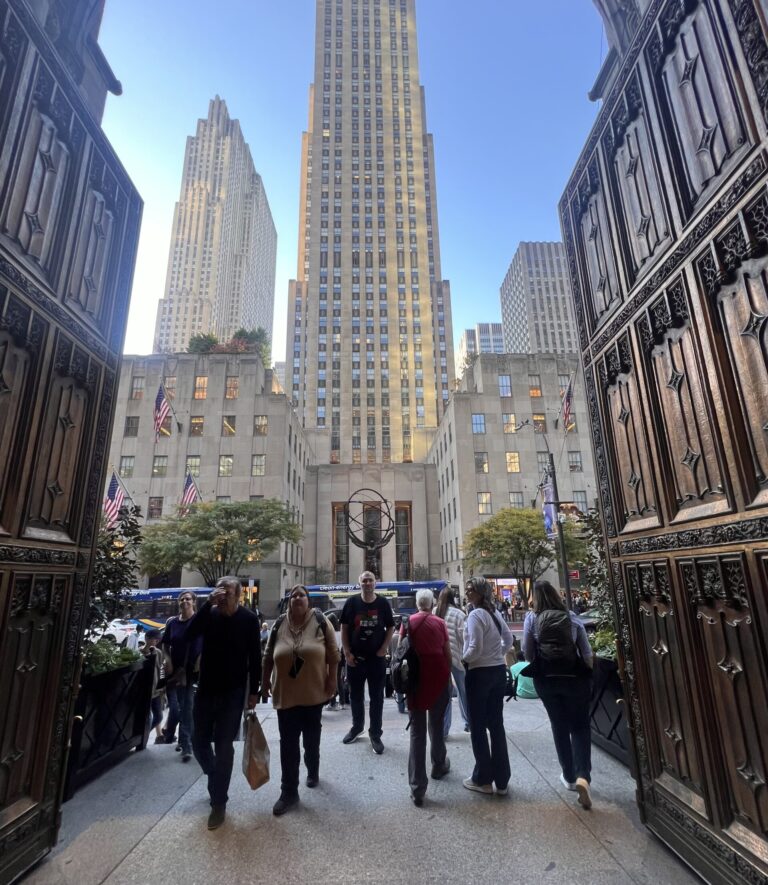
- Rockefeller Center — An Art Deco complex anchored by public art, observation terraces, and performance venues that showcase 1930s urban planning.
- Radio City Music Hall — An entertainment landmark famous for its stage shows and association with early broadcast-era spectacle.
- Grand Central Terminal — A monumental transit hub with celestial ceiling art and hidden architectural details that connect past and present travel.
- St. Patrick’s Cathedral — A neo-Gothic sanctuary on a bustling avenue offering a contrast between sacred architecture and commercial surroundings.
- Times Square — A kinetic crossroads of theaters, lights, and urban spectacle that demonstrates Midtown’s entertainment heart.
This quick list highlights why each stop matters and what guides usually emphasize, and it sets the stage for more detailed descriptions of Bryant Park and Rockefeller Center in the subsections below.
Introductory table to compare landmark highlights and prompt fast decisions for visitors:
| Landmark | Key Fact / Attribute | Why It Matters |
|---|---|---|
| Bryant Park | Active public programming & seasonal markets | Shows how public space anchors Midtown social life |
| New York Public Library | Beaux-Arts architecture & research collections | Symbol of civic learning and architectural craftsmanship |
| Rockefeller Center | Art Deco ensemble & public art | Demonstrates 20th-century urban design and cultural programming |
Discover Bryant Park and Its Cultural Significance
Bryant Park serves as a compact example of how public space can be reclaimed and animated, making it an essential stop on Midtown walking routes for cultural context. The park’s lawn, seasonal markets, and programmed events illustrate how a single block can host ongoing civic life, while its adjacency to the New York Public Library creates a powerful pairing of green space and institutional architecture. Visitors are encouraged to notice the kiosks, informal chess players, and the reading lawn as elements that reflect Midtown’s layered social economy. Guides often use Bryant Park to contrast earlier eras of neglect with contemporary revitalization, which leads naturally into an exploration of surrounding architectural landmarks and civic institutions.
Explore Rockefeller Center’s Art Deco Architecture and History
Rockefeller Center exemplifies the Art Deco style through its sculptural façades, integrated public art, and planned circulation between buildings, making it a staple for architecture-minded walking tours. The complex’s open plaza, iconic sculptures, and links to performance venues like Radio City Music Hall provide tangible examples of how corporate patronage shaped public space during the 1930s. Guides will often point out material choices, emblematic reliefs, and how seasonal installations transform the plaza’s function, which connects Rockefeller Center’s design to broader urban rituals and the visitor’s experience of Midtown.
How Can You Uncover Hidden Gems and Unique Local Stories in Midtown NYC?
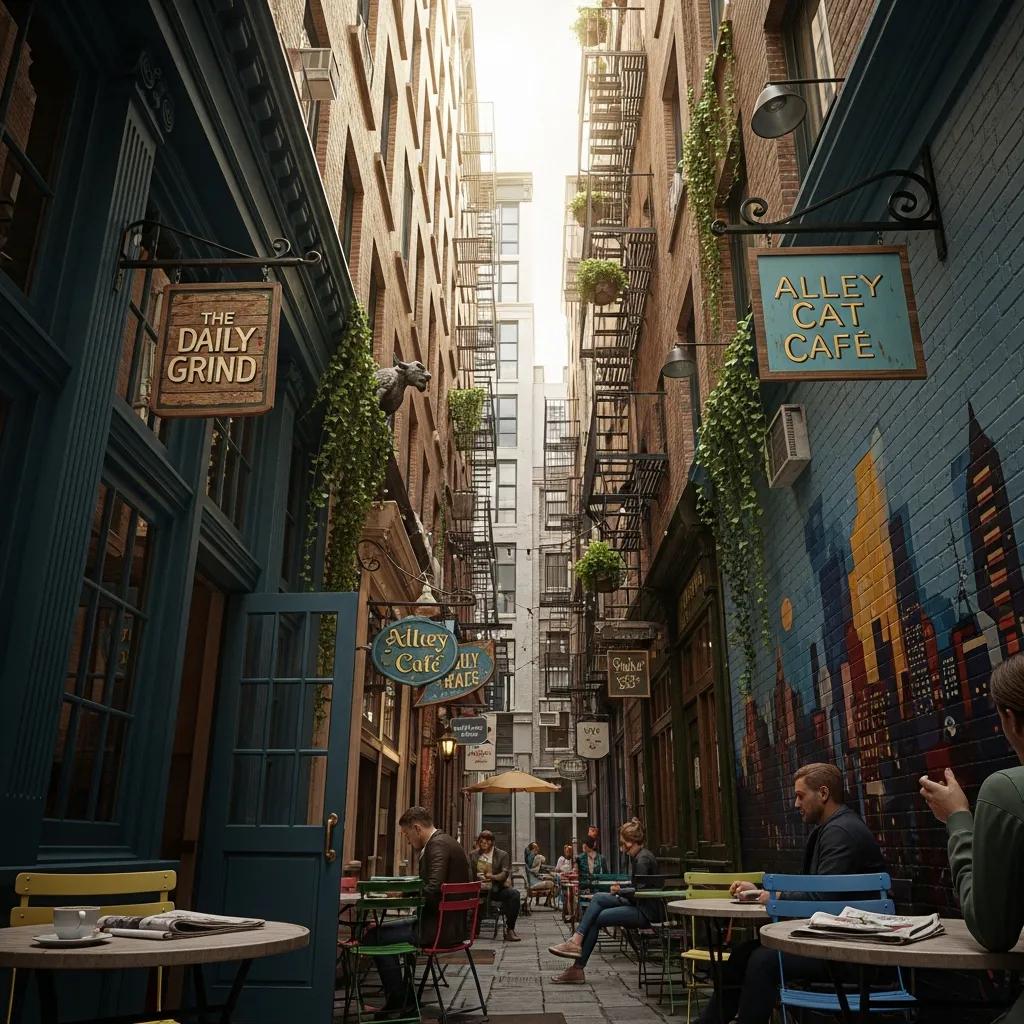
Finding Midtown’s hidden gems depends on looking past façades and listening for micro-histories—details like plaque inscriptions, alleyway thresholds, and small-business signs that reveal the neighborhood’s layered past. The strategy for uncovering these spots is deliberate: move slowly at key nodes, contrast archival stories with present-day uses, and ask guides about visual cues that indicate a building’s prior life. That approach converts a sequence of stops into a narrative chain where each lesser-known site amplifies a different facet of Midtown: finance, transportation, entertainment, or religious life. Below is a short table linking a few offbeat entities to practical tips for locating them on foot.
This table presents hidden-gem micro-stories paired with nearby practical recommendations to help walkers find and appreciate these subtler Midtown sites.
| Spot | Local Story / Tip | Nearby Practical |
|---|---|---|
| J.P. Morgan Building | Ornate banking façade with carved motifs reflecting financial history | Look for pocket cafes on adjacent streets for a quick break |
| Small Midtown Alleyways | Narrow lanes that once serviced theaters and warehouses | Explore side streets near Bryant Park for quieter views |
| Historic Lobbies | Lavish interiors hidden behind commercial exteriors | Check lobby hours and be respectful of private spaces |
Guides often surface these stories by pointing out visual cues—weathering on stone, reused signage, or unusual entrances—so paying attention to architectural details rewards the curious walker. That practice sets up the next subsection on a canonical hidden gem, the J.P. Morgan Building, which embodies how corporate architecture carries private histories into the public realm.
What Are the Lesser-Known Attractions Like the J.P. Morgan Building?
The J.P. Morgan Building is a prime example of a Midtown stop that reads as both architectural statement and institutional biography, making it a frequent “hidden gem” discussed on walking tours. Its façade ornamentation, material detailing, and discreet entranceways tell a story about early 20th-century finance and the symbolic language of banking architecture. On a walking tour, guides highlight decorative motifs and point out how the building’s scale and placement relate to adjacent commercial blocks, offering a compact lesson in how power is expressed through design. Noticing this structure encourages visitors to consider how private institutions shape public streetscapes, linking the J.P. Morgan Building’s narrative to broader Midtown themes.
Where to Find Unique Midtown Alleyways and Local Eateries Near Bryant Park?
Near Bryant Park, several narrow streets and service alleys hide small cafés, bakeries, and lunch counters that offer affordable, authentic Midtown dining options away from major thoroughfares. Guides typically point walkers to side streets for quick bites—venues that skew budget-friendly and favor quick service over formal dining—making them ideal for travelers on a tight schedule. Suggested approaches include scanning storefront hours, following local queues as a signal of quality, and trying signature items like a bakery sandwich or a house-made pastry that capture neighborhood flavor. These local stops demonstrate how culinary micro-economies complement the tour’s historical narrative and provide practical sustenance between landmarks.
Who Are the Local Guides Behind the NYC Free Tour and What Is the Free Tour Community?
Understanding who leads a Midtown Manhattan walking tour clarifies the experience: local guides function as narrators who link architecture, urban history, and present-day culture through curated commentary. Guides trained in local storytelling use semantic connections—linking one landmark’s history to another—to create coherent thematic arcs throughout the route. The Free Tour Community is a global network of independent local initiatives that emphasizes quality, local perspective, and community standards, helping travelers identify credible, community-rooted tours. The next paragraphs introduce the bilingual guide model and how membership in a community network strengthens traveler confidence.
Academic research further explores the intricate methods guides employ to bring the urban landscape to life through their narratives.
NYC Tour Guide Storytelling & Urban History
Through walking and talking, tour guides weave together an array of stories and facts in order to re-produce varied urban cultures and local histories. The practices of these ‘cultural intermediaries’ must at once be entertaining as well as educational, and are set within a rich urban context that is itself increasing in commercialization and homogenization. As a segment of a larger ethnographic study, this essay focuses on the storytelling tools these social actors use to reproduce New York City’s history, culture, and meaning—eight tricks of the trade. As illustration of this social world and the practices within it, description of a Grand Central Terminal tour is woven throughout the analysis in a series of vignettes.
Guiding practices: Storytelling tricks for reproducing the urban landscape, JR Wynn, 2005
Meet Our Bilingual Midtown Tour Guides Offering Authentic Perspectives
Midtown tour guides in many independent initiatives often offer tours in both English and Spanish, which expands access and enriches interpretation by speaking to diverse visitor backgrounds. These bilingual guides combine historical knowledge with contemporary observations, translating architectural and cultural references into approachable stories that resonate across languages. Expect narrators to use concise semantic linking—explaining how a single building connects to transportation, commerce, and entertainment—to help multilingual groups follow the tour’s thread. That bilingual capability supports richer engagement for non-English speakers and encourages cross-cultural questions that deepen the walking experience.
How Does the Free Tour Community Enhance Your Walking Tour Experience?
The Free Tour Community functions as a trust-building network by connecting independent local initiatives under shared standards for guide quality and tour transparency. Membership signals that a tour operates within a recognized model—often tips-based—where guides are locally rooted, share community knowledge, and practice consistent storytelling techniques. For travelers, this affiliation reduces friction when choosing among options because the community supports training, information exchange, and reputation-building among guides. Understanding this framework clarifies why many visitors opt for community-affiliated tours: they combine local authenticity with informal quality assurances, enhancing the overall walking experience.
After explaining guide models and the Free Tour Community, it’s useful to note the specifics of the Midtown product offering: the Midtown Manhattan Walking Tour is commonly presented as a two-hour, approximately 1.5-mile route with about a dozen stops covering Bryant Park, New York Public Library, Fifth Avenue, Rockefeller Center, the J.P. Morgan Building, Radio City Music Hall, Grand Central Terminal, St. Patrick’s Cathedral, Broadway theatre areas, Times Square, and additional highlights. This tips-based, bilingual tour model makes the experience accessible while preserving local perspective and narrative depth.
How to Plan Your Midtown Manhattan Visit: Tips, Itinerary, and What to Expect
Planning for a Midtown Manhattan walking tour requires attention to timing, mobility needs, and basic etiquette for tips-based experiences, and a short logistics summary helps travelers prepare efficiently. A typical Midtown route runs about two hours, covers roughly 1.5 miles, and stops at around 12 key sites, offering a compact tour that balances pace with interpretive depth. Practical planning includes wearing comfortable shoes, checking weather-appropriate layers, and arriving a few minutes before the designated meeting point to avoid missing the group start. The summary below provides a quick itinerary and a short table that captures core logistics for fast decision-making.
Quick planning bullets summarize what to expect on a standard Midtown walking tour:
- Typical duration is around two hours with moderate walking at an easy pace.
- Expect roughly 1.5 miles of walking and about a dozen stops focused on architecture and cultural history.
- Bring water, comfortable shoes, and a small umbrella when the forecast calls for rain.
This concise itinerary readies readers for the pace and content of a Midtown route and sets up the more detailed route and accessibility notes that follow.
| Logistics Item | Attribute | Value |
|---|---|---|
| Duration | Typical tour length | 2 hours |
| Distance | Approximate walking distance | 1.5 miles |
| Stops | Typical number of stops | ~12 |
What Is the Duration, Distance, and Route of the Midtown Manhattan Walking Tour?
The Midtown Manhattan Walking Tour typically lasts two hours, covers about 1.5 miles, and features roughly twelve curated stops that blend parks, transit hubs, theaters, and notable façades into a single coherent route. The pace is generally moderate, allowing time at each stop for explanation, photography, and brief Q&A, while the route’s short distance keeps it accessible to most walkers. Guides often design the sequence to minimize backtracking and to group nearby landmarks thematically, such as pairing Bryant Park with the New York Public Library and linking Rockefeller Center to Radio City Music Hall. Accessibility considerations—such as limited curb cuts at some intersections—are usually addressed by guides in advance to ensure participants can plan accordingly.
What Are the Best Budget Travel Tips for Enjoying Midtown NYC?
Budget-conscious visitors can maximize Midtown’s offerings by combining the tips-based walking tour model with inexpensive dining and free cultural amenities, using timing to avoid peak crowds and choosing transit passes for repeated travel. For tips-based tours, bring modest cash or a digital tip option if available, and consider tipping according to perceived value and guide engagement. Seek out quick-service eateries on side streets near Bryant Park for economical options and use off-peak hours for smaller lines at major stops. These strategies preserve the tour’s quality while keeping costs low, making Midtown an approachable destination for travelers on a budget.
Practical transit and timing advice leads naturally into remembering what reviewers commonly praise about the Midtown walking experience, which is the focus of the next major section.
What Are Visitors Saying About the Free Walking Tour Midtown Manhattan?
Visitor feedback for Midtown walking tours typically centers on guide storytelling, the efficiency of the route, and the balance between iconic stops and local insights. Review themes often highlight how knowledgeable guides bring buildings to life, how the 2-hour duration fits well into tight itineraries, and how bilingual offerings expand accessibility. Below is a short synthesis of common sentiments and a list of the most-cited highlights according to guest impressions, followed by a note about how to leave a tip or review respectfully.
Common themes from guest feedback:
- Guides are praised for contextual storytelling that links architecture to social history.
- The tour’s duration and compact route are valued by travelers with limited time.
- Guests commonly appreciate the mix of major landmarks and lesser-known anecdotes that enrich the experience.
These takeaways indicate why many visitors recommend incorporating a Midtown walking tour early in their trip planning and why guide quality tends to shape overall satisfaction.
How Do Tourists Rate Their Experience on the Midtown Manhattan Walking Tour?
Tourists often rate Midtown walking tours positively for storytelling, pace, and the balance of iconic and hidden stops, noting that enthusiastic guides make historical details accessible and memorable. Common constructive feedback centers on pacing for very large groups or the desire for slightly more time at specific stops, which guides sometimes address through optional follow-up recommendations. Overall, reviews emphasize the value of local perspective—how guides translate architectural features into human stories—and the bilingual availability that makes tours welcoming to a wider audience. These patterns underscore the central role of guide skill and tour structure in shaping visitor satisfaction.
What Are the Most Popular Highlights According to Guest Reviews?
Guest reviews frequently single out a handful of moments that resonate most strongly, reflecting both visual spectacle and narrative payoff—ideal cues for future visitors to prioritize during the walk.
- Bryant Park: Praised for its green respite and seasonal programming that contrasts urban density.
- Grand Central Terminal: Admired for its civic scale, celestial ceiling, and hidden architectural details.
- Rockefeller Center: Highlighted for public art, design cohesion, and its role in seasonal city rituals.
- Times Square: Noted for sensory impact and the theatrical energy of Midtown’s entertainment district.
- J.P. Morgan Building: Valued by guests who enjoy discovering corporate-era design and discreet ornamentation.
These ranked highlights show why a balanced route—mixing major attractions and micro-stories—matches visitor expectations and explains how guides frame each moment to maximize interest.
For travelers who enjoyed the tour and want to support guides, leaving a tip and a short review helps sustain tips-based initiatives and assists future visitors in choosing community-rooted experiences. To learn more about specific tour schedules or to book a spots-based tour from a local initiative, look for the NYC Free Tour brand, which operates tips-based, bilingual walking tours that emphasize local perspective and membership in the Free Tour Community.
Leave a Reply